Cabinets shape more than the look of a kitchen. They influence how the room feels, how it functions, and how it connects to the rest of the home.
For 2026, natural wood and warmer finishes are a strong part of the conversation. The National Kitchen & Bath Association’s 2026 report identifies growing interest in wood grain, with white oak leading its wood-species preferences. Painted cabinetry still offers plenty of beautiful possibilities, especially when paired thoughtfully with wood and metal.
Whether you are planning a coastal custom home or gathering ideas for your next kitchen, start with the combination: cabinet color, door style, wood finish, and hardware should work together.
Download the illustrated guide (PDF, 8 pages)
Trend reference: National Kitchen & Bath Association 2026 Kitchen Trends Report.
Painted cabinets: warm neutrals, confident color
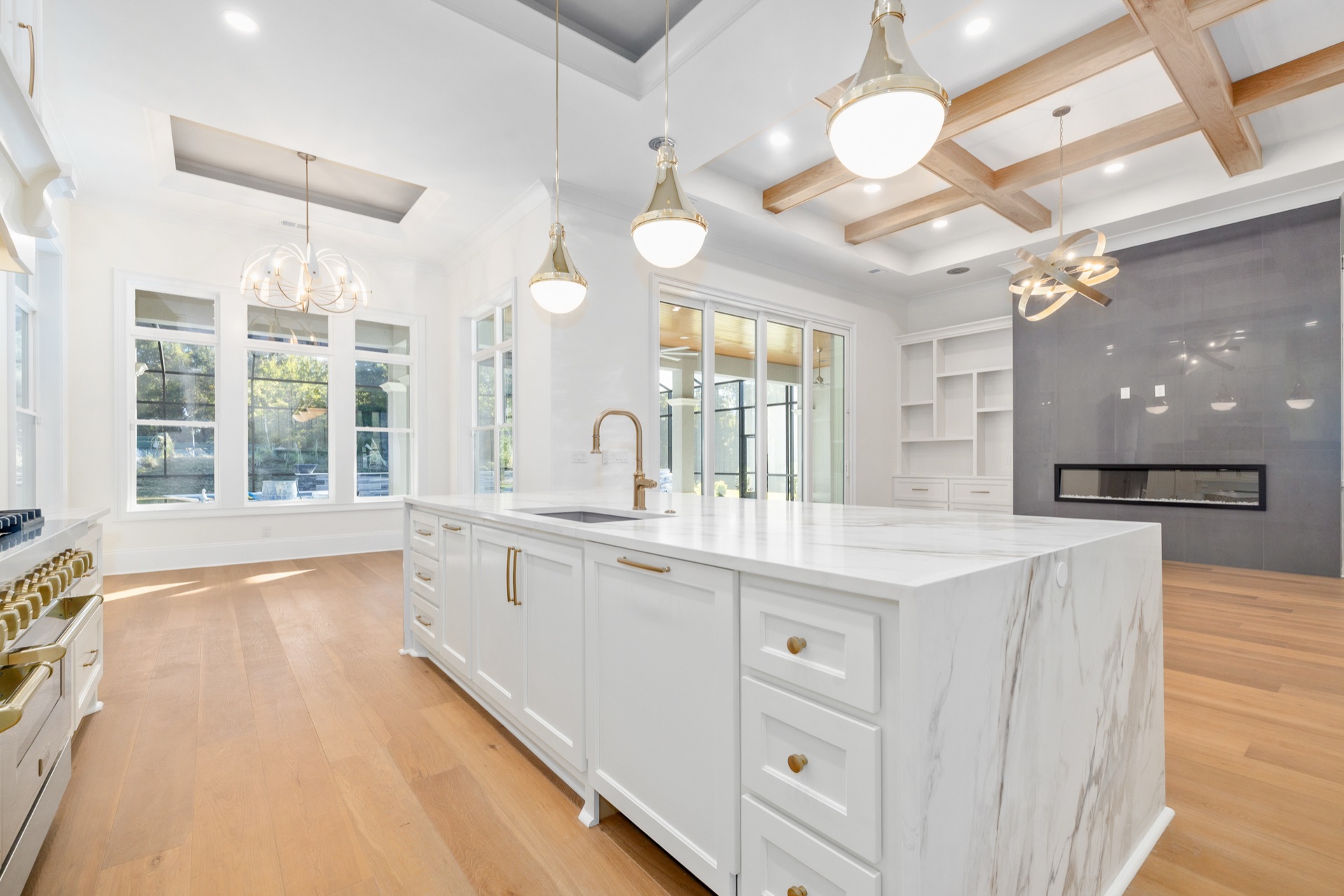
White cabinets remain a versatile starting point. For a softer look, consider warm white, ivory, or cream alongside natural wood and warm-toned stone. Benjamin Moore’s White Dove OC-17 is one example worth sampling.
For something beyond white, our suggested directions include:
- Mushroom and taupe for subtle depth and an earthy feel.
- Sage and muted olive for color that sits comfortably beside wood.
- Dusty blue and navy for a coastal palette with more definition.
- Charcoal for a deeper accent on an island or a separate cabinet wall.
These are design options, rather than a list of colors every homeowner needs to follow. The right shade depends on the room’s light and the materials around it.
Before approving a finish, view a full cabinet-door sample beside your countertop, backsplash, and flooring. A color that looks perfect on a screen can feel quite different across an entire kitchen.
For a quieter palette, keep the perimeter cabinetry neutral and introduce color on the island. For a more enveloping room, carry one muted color across the cabinet runs and let a lighter countertop provide relief. Either approach works best when the flooring and backsplash are considered at the same time.
Color reference: Benjamin Moore kitchen cabinet paint colors.
How the doors fit: inset vs. full overlay
Look at the frame around the door, then look at the narrow gaps between neighboring fronts.
Inset
Inset doors and drawer fronts fit within the face frame, with their faces flush with it. The exposed rails and stiles form a visible border around each front.
That pattern can give cabinetry a tailored, furniture-like character. It is worth considering when the kitchen shares the language of traditional millwork elsewhere in the home.
Study a complete cabinet run as well as a single door. Consistent gaps and careful installation are part of the finished look.
Full overlay
Full-overlay fronts sit over the cabinet front, covering most of it. The narrow separations between neighboring doors create a more continuous surface.
This can feel clean and restrained with Shaker doors, or more contemporary with flat slab doors. The wood, finish, and hardware still have a major influence on the room.
Neither fit determines the quality of the cabinet behind it. Compare construction and installation separately from appearance.
Shaker is a door design. Inset and overlay describe the fit.
White oak: light and layered
White oak is a beautiful starting point for a light, natural kitchen. It can introduce warmth without requiring the deeper brown tones of walnut. Paired with soft white surfaces, it offers a relaxed direction for a coastal home.
The species is only the beginning. The grain pattern, door profile, and finish all affect the result. A lightly finished door and a deeply stained door can look very different even when both are white oak.
Consider where the grain will be most visible: an island end, a wall of tall cabinets, or a broad drawer front. Ask the cabinetmaker to show how the grain will be arranged across those surfaces.
For a simple combination, try white oak, a quiet ivory countertop, and brushed nickel. For more contrast, consider darker hardware or a painted island.
Choose the finished door sample, not the wood name alone.
Walnut: rich and substantial
Walnut brings a richer brown tone and a stronger visual presence. It can make an island feel like a substantial piece of furniture, especially when the surrounding cabinetry is lighter.
For a room with extensive walnut cabinetry, consider how the countertop, walls, and daylight will balance it.
A walnut island does not require walnut everywhere else. Warm white perimeter cabinets can give it space to stand out. A separate beverage cabinet or pantry wall is another place to introduce a richer wood tone.
Satin brass can reinforce walnut’s warmth; polished nickel offers a brighter accent. Take both samples to the actual finished door before choosing.
When comparing white oak and walnut, decide which role you want the wood to play: a light background throughout the room, or a deeper focal point within it.
Painted perimeter + wood island is a useful place to start.
Hardware changes the mood
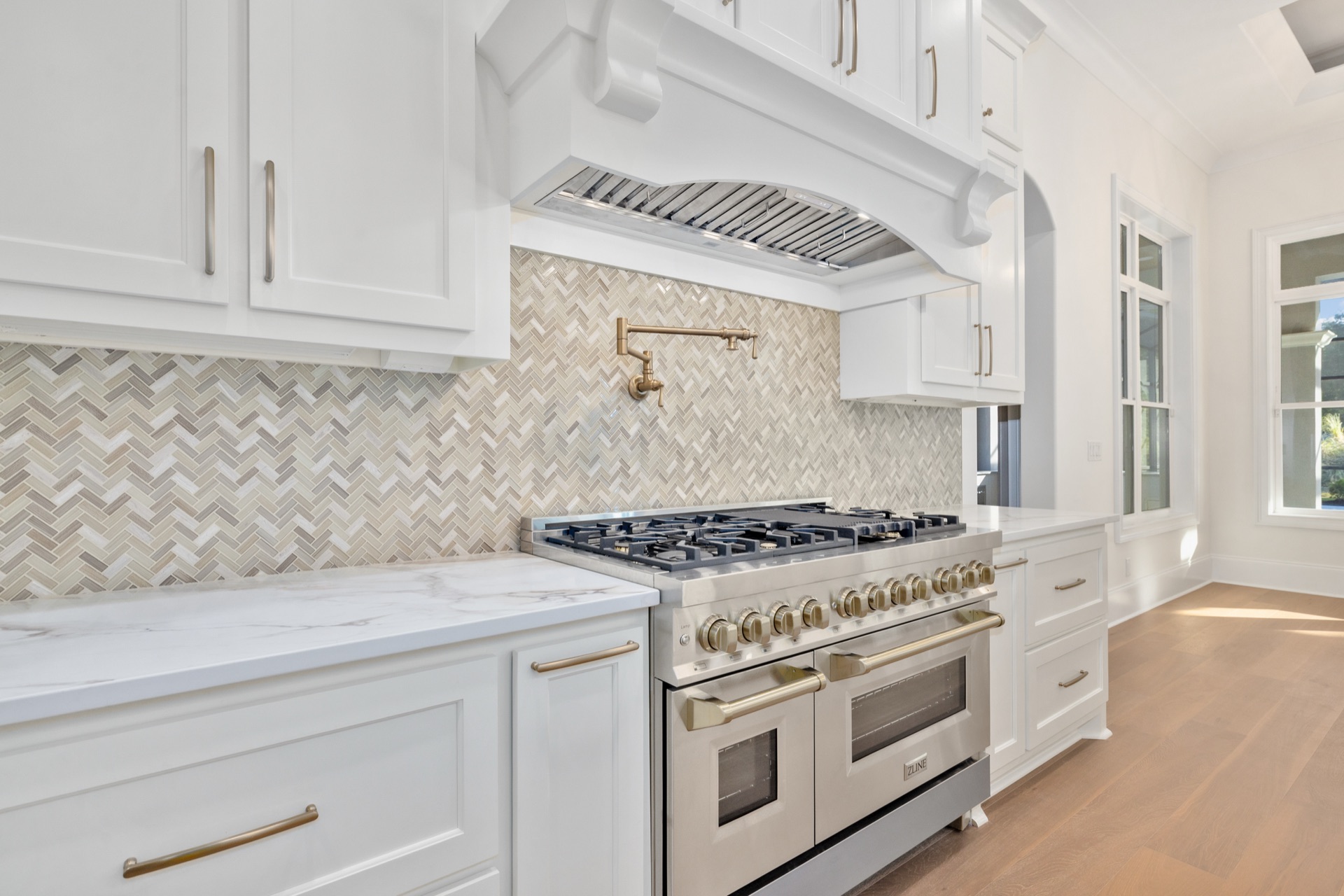
Hardware changes the character of a cabinet door. Use these combinations as starting points, then compare the actual tone, sheen, shape, and scale against your selected finish.
| Cabinet finish | Hardware to consider | The effect |
|---|---|---|
| Warm white or cream | Brushed brass | Warm and elegant |
| Sage or muted olive | Aged brass | Earthy and layered |
| Navy | Polished nickel | Crisp and classic |
| White oak | Matte black | Defined contrast |
| White oak | Brushed nickel | Quiet and understated |
| Walnut | Satin brass | Warm and rich |
| Walnut | Polished nickel | Bright against dark wood |
| Charcoal | Brushed brass | Warmth and contrast |
Gold-colored finishes vary from pale champagne to deeper aged brass. Silver-colored options include nickel, chrome, and stainless steel. A shared color name does not guarantee a match across manufacturers.
Mixing metals can work beautifully when there is a plan. Choose a principal finish, then repeat the secondary finish deliberately across lighting, plumbing, or hardware. There is no need to introduce every finish into one room.
Finally, test the pull in your hand. Review its size on the actual drawer front, and decide where knobs and pulls make everyday use comfortable.
Stock, semi-custom & custom: choose where custom matters
The important question is how much flexibility your kitchen needs, and where that flexibility improves the finished room.
- Stock. Predetermined cabinet sizes and a defined selection of styles and finishes. A practical option when the layout works with the available choices.
- Semi-custom. A broader menu of styles, finishes, and selected modifications. Confirm which dimensional changes and details the manufacturer actually offers.
- Custom. Project-specific dimensions and specifications. Useful for unusual proportions, distinctive woodwork, and cabinetry that must align closely with the architecture.
Look beyond the category label. Compare cabinet-box materials, door construction, drawer boxes, finish, hinges, and slides. Review installation details, warranty terms, and the complete delivered-and-installed scope.
Request pricing on the same layout and specification. A quote with more finished ends, storage accessories, or appliance panels is a different package.
Full overlay does not mean prefab, and inset does not automatically mean fully custom. Door fit and manufacturing flexibility are separate decisions.
Spend on customization where it has a clear purpose: the main island, a prominent cabinet wall, a difficult corner, or storage that standard sizes cannot serve well. A well-selected stock or semi-custom line may suit other spaces beautifully.
Good planning makes every cabinet choice work harder.
Category reference: Canadian Kitchen Cabinet Association.
The complete kitchen: bring the materials together
A beautiful kitchen does not need every finish to compete for attention. Choose the main material relationship first, then let the smaller decisions support it.
For a warm, classic direction, consider painted cream perimeter cabinets, a walnut island, and brushed brass. For a lighter coastal palette, consider white oak, an ivory countertop, and brushed nickel. For more definition, try a muted blue island against warm white cabinetry with polished nickel hardware.
If the countertop has strong movement, a quieter cabinet finish may give it room to stand out. If the cabinet wood has a striking grain, a simpler backsplash can help the room feel composed.
Before placing the order, bring the cabinet door, countertop, backsplash, flooring, and hardware samples together. View them in daylight and under the planned lighting. Compare the whole palette instead of approving each material in isolation.
The goal is a kitchen that fits the architecture and feels good to use every day. Trends provide ideas; the complete home should guide the final choices.
Planning your custom home? Talk with Richardson Custom Builders, or download the illustrated guide (PDF).